What Is in Beyond Beef Burgers
What You lot're Really Eating When You Eat A Beyond Burger
Angela Weiss/Getty Images
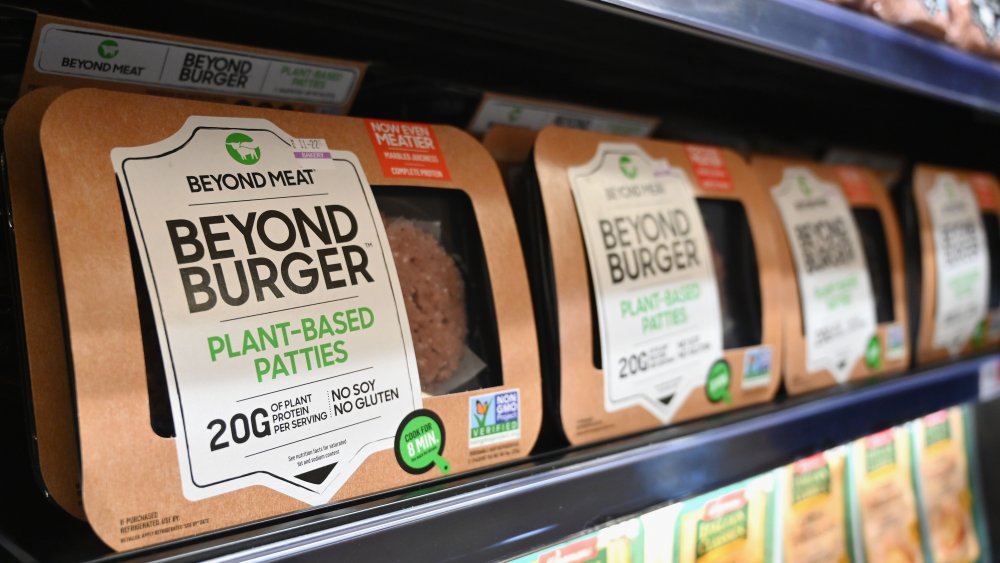
Information technology sizzles. It browns. It fifty-fifty drips heavenly juices into the crevices of your fingers. It tastes like a delicious beefiness patty — but information technology's got more beets than beef.
It'south the Beyond Burger, and with its competitors in the plant-based meat manufacture, this vegan alternative has revolutionized the adept ole' fashioned American burger. Fabricated entirely of plants and institute derivatives, the recipe for a Across Burger is as much engineering equally information technology is ingredients — ingredients that have to somehow transform from peas, beans, and kokosnoot into a marbled, pink and red patty that cooks, looks, and tastes merely similar beefiness.
At starting time glance, the Beyond Burger seems nigh similar witchcraft in its optical illusions and flavor enhancements, or, in other words similar a whole lot of processing. This has led to some business regarding its health benefits, and whether it'southward actually any meliorate for you lot than a traditional beefiness patty. But as a spokesperson from Beyond argued, "There'southward a difference betwixt processed and a process."
Out of the 18 ingredients listed on Across'south website, some are familiar, like dark-brown rice and salt. Others, like methylcellulose, are a little less and so. We took a look at those to figure out what they were, and how exactly ane turns plants into "meat." This is what you're really eating when y'all eat a Across Meat burger.
Across Burgers get poly peptide from legumes
Shutterstock
There are twenty grams of protein in a Across Burger, the aforementioned you'll find in a regular beefiness patty at Burger King, according to Business Insider. Only in a Across Burger patty, much of that poly peptide comes from pea protein.
But what exactly is pea protein? It'due south not peas, exactly, but an excerpt of the proteins in split peas. This makes it a vegetarian and dairy-costless culling to creature poly peptide, and a pop ingredient for vegan protein shakes or poly peptide confined. Technically from a legume, pea protein'southward nutritional benefit includes ix of the essential amino acids, although information technology is low in methionine, and is not a complete protein source. Unfortunately, in extracting the poly peptide from the institute, you're likewise leaving behind some of the practiced stuff, like magnesium, folate, and potassium (via The American Found for Cancer Research).
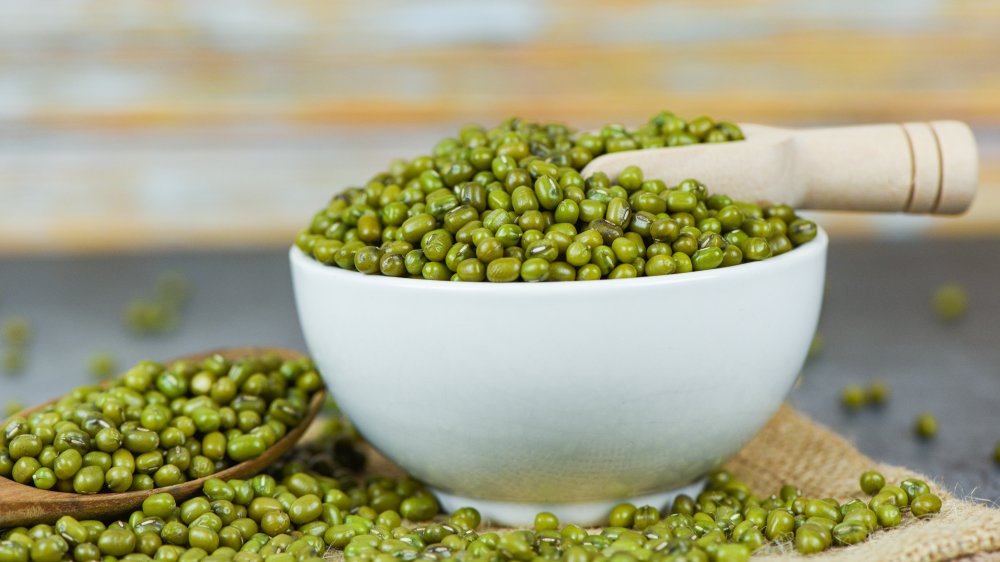
The other legume in the Beyond Burger is the mung bean. Despite its funny proper name, The Washington Post says this little light-green jewel of a bean is a powerhouse of nutrition. It has lots of cobweb, nutrients, and vitamins, and helps regulate blood sugar. Even in its extracted form, mung edible bean poly peptide tin can help control blood force per unit area and is linked to increased brain development in infants (via the National Eye for Biotechnology Information).
Across Burgers utilise brown rice proteins, instead of soy
Shutterstock
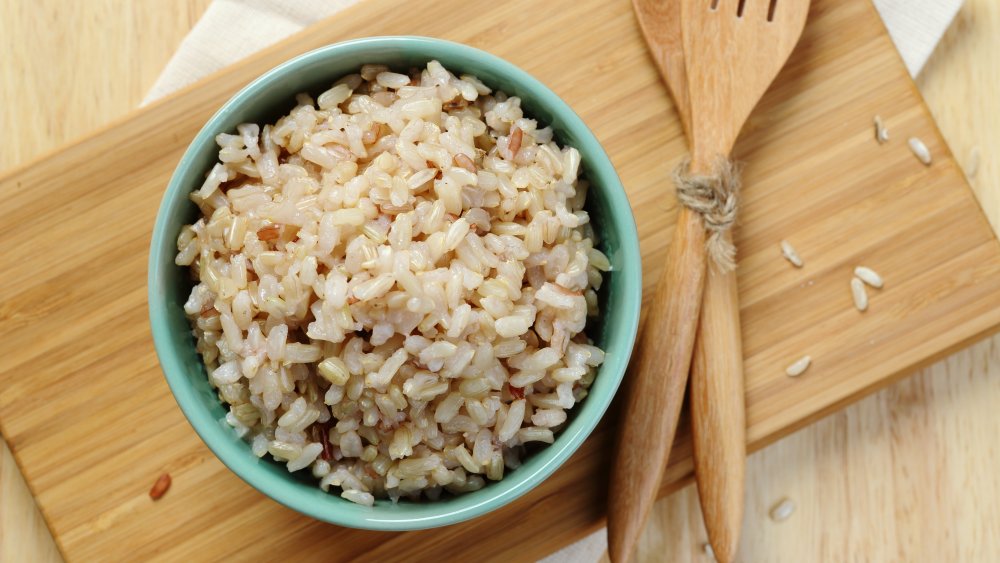
The non-legume protein in the Beyond Burger is brown rice poly peptide. In addition to the pea and mung bean protein, this actually makes the Across Burger a complete poly peptide source, containing enough of the nine amino acids that are required for optimum health. Other establish-based sources of complete protein include quinoa, buckwheat, and soy.
Soy in particular is a common ingredient in veggie burgers and is found in the Incommunicable Burger, Across's biggest competition. Merely the Beyond Burger is unique in that information technology is a plant-based meat alternative that is completely soy-free. Although soy has its own wellness benefits, it'southward also pretty controversial. "Consumers don't like soy, whether information technology's because the milk board's doing a really skillful (PR) job or what, I don't know. But consumers don't like soy, and that fabricated everyone's job here actually hard," Across Meat CEO Ethan Dark-brown toldCNET.
As the 3rd corner of the Beyond Burger'south trio of establish proteins, dark-brown rice protein provides a manner to increase protein consumption while fugitive the red and candy meats that researches at the Harvard School of Public Health take linked to chronic illness and cancer. Information technology is also easy to digest and suitable for lactose intolerant people.
The brown rice protein also played a office in altering the texture of the Beyond Burger. While earlier iterations of the Across Burger only contained pea poly peptide, adding brown rice protein helped to arrive coarser and more than meat-like.
The Across Burger contains plant oils for a juicy patty
Drew Angerer/Getty Images
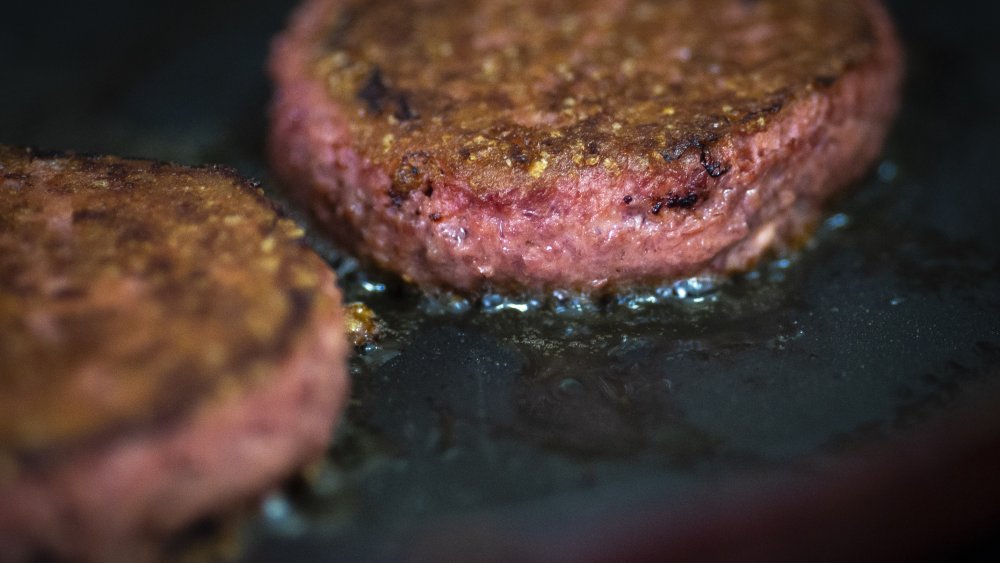
Although plant oils sound more like something you'd want to put in your pilus than eat, the canola oil gives the Beyond Burger a juicy, fatty flavour that mimics that of a meat patty. This dripping of found oil simulates the mode a meat burger bleeds beefy juices when it's pressed down or bitten into. These institute oils also go along the burger moist while information technology'southward existence cooked, and help it retain its ground meat-like texture.
That being said, the fat in the Beyond Burger is non insubstantial at xviii grams — another way it's like a traditional burger. Most (simply non all) of the fat, however, is unsaturated fat, which won't raise LDL cholesterol levels (via the Mayo Clinic). In terms of fat, the Beyond Burger succeeds in that it emulates the way fat in beef works to deliver a punch of flavor in a hamburger — just that do good comes with 160 calories from fat alone.
In line with keeping the product moist, Across Burger contains sunflower lecithin. According to Livestrong, lecithin is an emulsifying agent that helps demark together fats and non-fats, and using sunflower lecithin instead of the more mutual soy lecithin is another fashion Beyond maintains a soy-gratis and GMO-free product.
The Beyond Burger uses coconut oil and cocoa butter for marbling
Shutterstock
In add-on to canola oil, the Beyond Burger besides added solid plant fats such as coconut oil and cocoa butter in its latest iteration. In June 2019, Beyond appear they had created a new "meatier" burger with "mouthwatering marbling" which would not but melt like beefiness fat, just farther tenderize the meat as information technology did so.
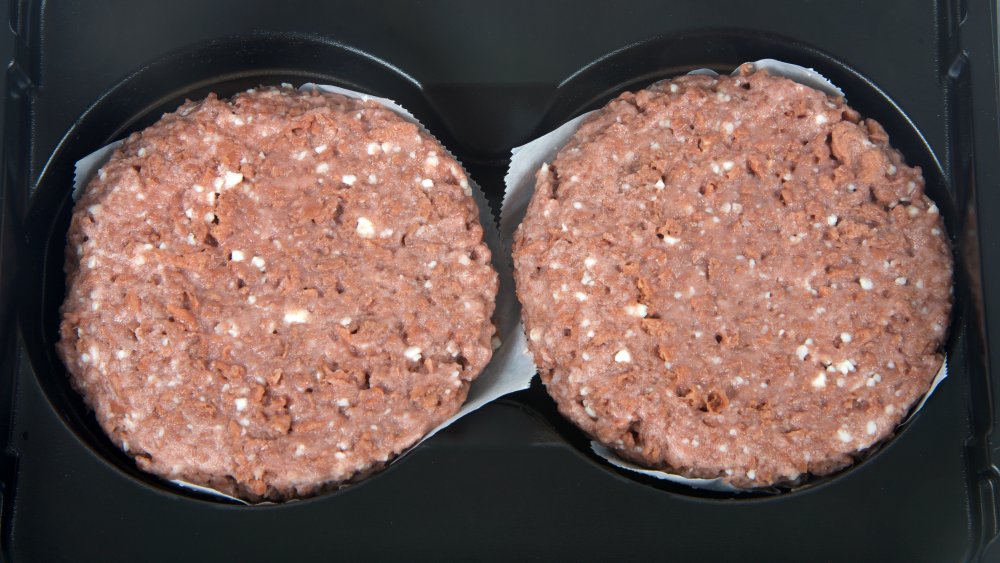
Although these solid plant fats also add to the juicy texture and sense of taste of the burger, the refined coconut oil and cocoa butter are used to create the illusion of small, white flecks of fat dispersed evenly throughout the pinkish "meat" protein. This makes the deed of cooking the Beyond Burger more similar to flipping actual beef patties, calculation to the overall sensory experience from grocery shop to kitchen to dinner plate.
Nevertheless, as solid fats, the addition of coconut oil and cocoa butter means the Beyond Burger is not free of saturated fats. Its half-dozen grams of saturated fats are 30 per centum of your daily recommended intake, and CNBC says it has some dieticians concerned.
Notwithstanding compared to a regular beefiness patty, the Beyond Burger all the same has 25 pct less saturated fat, and all the saturated fats are still from plants.
Heating, cooling, and pressure level help create the Beyond Burger's texture texture
Adam Berry/Getty Images
Not listed in the ingredients in a Beyond Burger is probably one of its most interesting components — all the technology that goes into transforming found protein into something that resembles meat. This process of heating, cooling, and pressure somewhat replicates a cow'south 4 stomachs, according to Esquire. In the same way that a cow eats plants and converts them into musculus (which we so swallow) Beyond breaks plant proteins downward on a molecular level, moves and shifts things around, then reconstructs it all together in the shape of meat.
"Part of our process is we build the Beyond burger layer by layer," said a spokesperson from Beyond Burger told Mashed. And the first layer is the protein. "While plants are structured in circular groupings, meat is fibrous and structured in long strands." The play a joke on is simply changing the shape. Except it'due south non that simple to do.
And so how do they take the round shape of found molecules and make them similar the long strands of meat? This is where the process of heating, pressure, and cooling comes in. The heating allows the molecules to movement, and pressure is then applied to create the long, meat-like strands. Lastly, the cooling is used to ready and hold the shape. Think of how nosotros heat chocolate, cascade it into a mold, so freeze it to set its shape. Of form, making chocolate and making a Beyond Burger is non a perfect comparison, but the basic principles are similar. The outcome is meaty institute-based poly peptide.
Unlike meat, the Beyond Burger is not carb-free
Shutterstock
Sorry, but the Beyond Burger is not carb-free... but the carbs are depression at merely three grams. A beef burger patty, on the other hand, is completely free of carbs. And so why are there carbs in the Beyond Burger?
While many meat alternatives looked for meat-like structure in plant proteins, Beyond took a dissimilar approach and chose to build their production layer by layer, component by component. These components, according to what Beyond Meat CEO Ethan Dark-brown told Bloomberg Businessweek, include texture, fat, flavor, aroma, and appearance. Merely to maintain these dissimilar layers of texture and flavors, something is needed to human action every bit a glue.
Although its very scientific proper noun sounds a bit intimidating, methylcellulose is a chemical compound that is not naturally occurring, merely is actually quite common in a lot of food. It'due south found in everything from ice cream, to veggie burgers, and even reconstructed seafood. Beyond Meat told Today that methylcellulose makes upwards less than 2 percent of the full weight of a Across Burger patty. Still, its part is vital in forming the Beyond Meat into, well, a Beyond Burger patty.
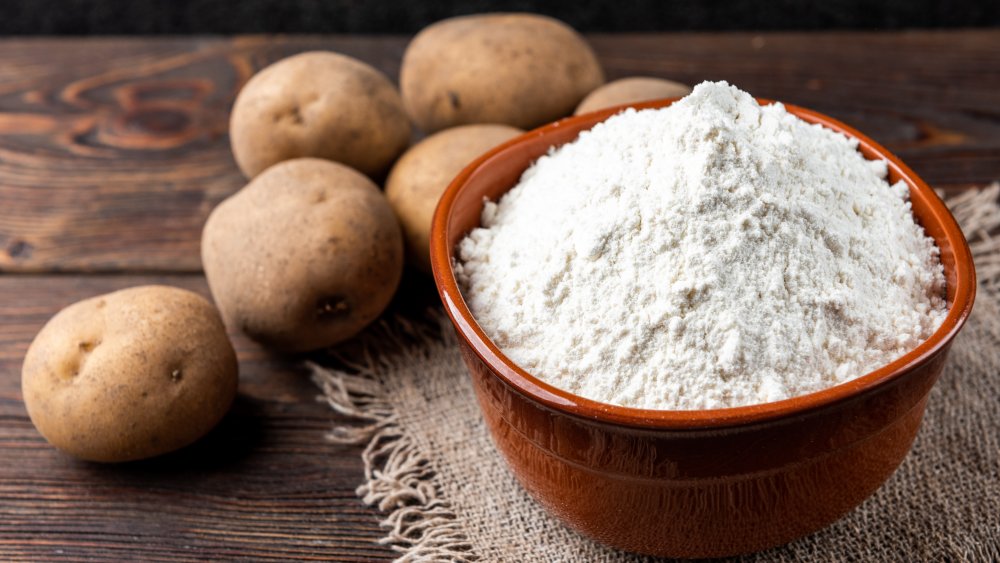
In add-on to methylcellulose, potato starch is also used as a thickening and bounden agent — and that'south where those carbs come from. Together, they permit the burger to hold its shape all the style from product to showtime seize with teeth. The useful thing about both methylcellulose and potato starch is that they are gluten-free, significant the Across Burger itself is likewise gluten-free.
Atomic number 26 and calcium give the Across Burger a boost... or do they?
Shutterstock
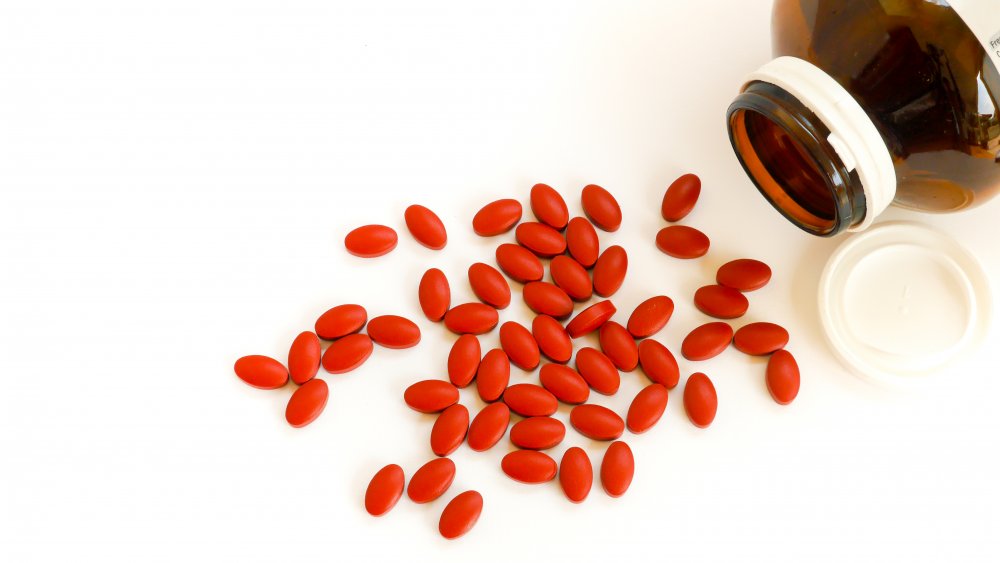
To try and replicate some of the vitamins and minerals you lot'd get from a meat patty, Across Burgers have both added calcium and iron. However, the added iron serves another of import function in the Beyond Burger. Calculation iron actually makes the burger taste more similar meat, or as Across puts information technology, "wakes up our gustation buds with each bite."
But other than the taste gene, why go out of the way to add "meat" minerals? While many doctors and dieticians recommend plant-based diets, they often discuss the possibility of deficiencies in fe or calcium and suggest increasing these nutrients using supplements. All the same, whether these concerns are founded is still up for debate in the medical community.
Some doctors believe the possibility of deficiencies to be incredibly low, and that the greater problem is actually the agin side effects of these supplements. Equally doctor John McDougall explained (via DrCarney.com), "More than a one-half-century of artistic marketing by the meat, dairy, egg, and fish industries has produced fears surrounding nonexistent deficiencies" and that a plant-based diet actually doesn't require supplements in calcium and atomic number 26. In other words, although it'due south dainty that the Across Burger provides 8 percent of your daily calcium and a whopping 25 percent of your daily iron — yous probably don't need it.
The Beyond Burger contains (maybe too much) common salt
Shutterstock
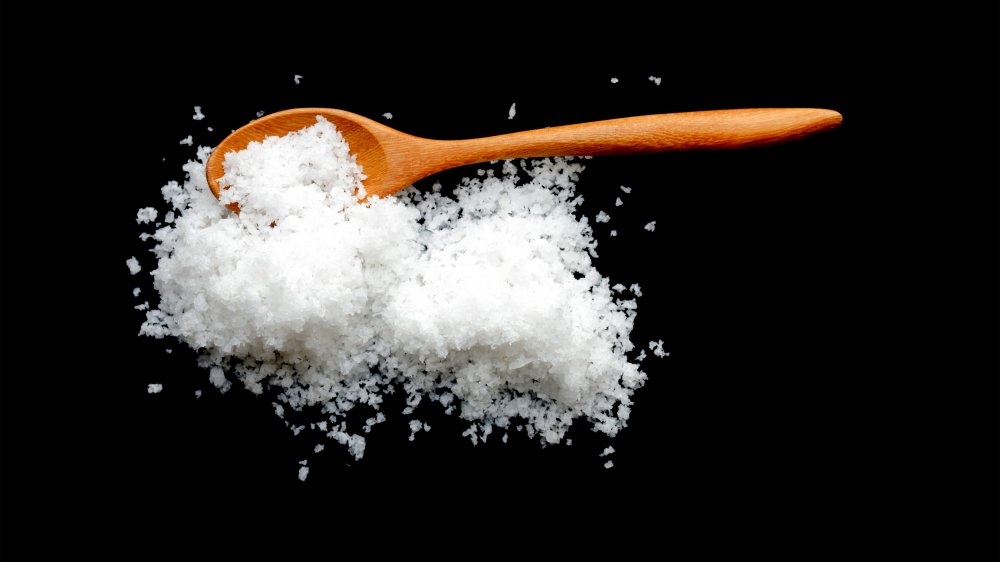
The Beyond Burger does have added salt, which tin go far a problem for people on low-sodium diets. While the sodium in a regular beef patty is 75 mg, the sodium in a Beyond Burger is 390 mg (via Women's Wellness). Salt enhances the flavor of the Beyond Burger, and according to Forbes, it is not uncommon for many vegan and vegetarian products to take unexpectedly loftier salt contents.
In addition to salt, the Beyond Burger also contains potassium chloride, which is a common salt substitute that is sometimes used to lower the amount of sodium in food. You lot might recognize information technology from your Uncle's Morton's Lite Salt. Potassium chloride is by and large considered safe for the average adult population, and equally long equally its use follows safety guidelines, is a prophylactic way to replace larger amounts of sodium chloride.
Even so, for those with kidney problems, consuming excess potassium chloride can exist dangerous, as the body is unable to eliminate excessive potassium. For the almost part, however, although the Beyond Burger is high in sodium, it's however below the American Heart Association'due south recommendation of less than 1,500mg a twenty-four hour period, and the potassium chloride used to keep the sodium levels down further is rubber likewise.
Across Burgers incorporate beefy plant flavor molecules
Justin Sullivan/Getty Images
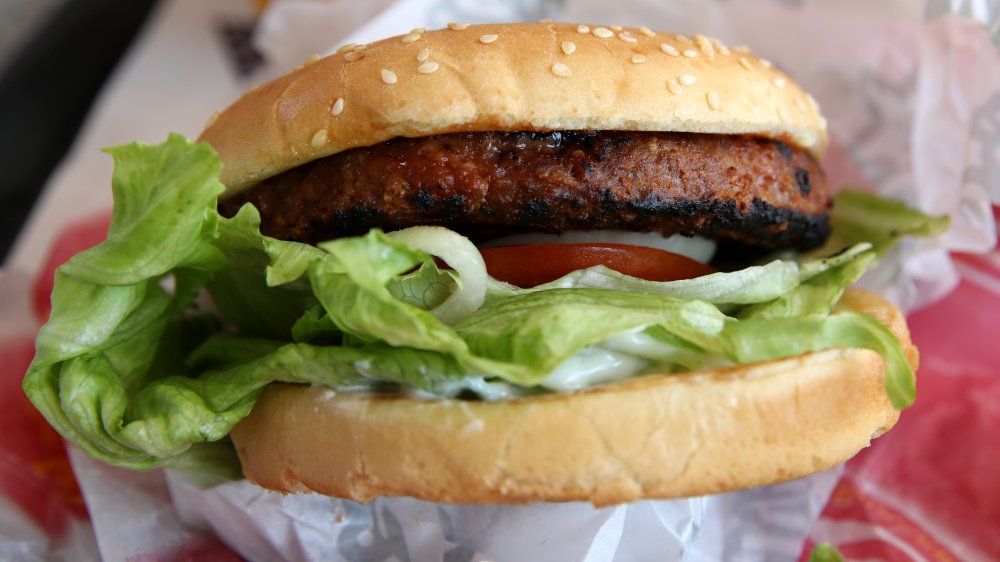
"I wish bean proteins tasted like beefiness," jokes a spokesperson from Beyond. "That would make our chore a lot easier." Later on creating the proteins and fats that make up the bulk of the Beyond Burger, the next stride is to focus on the taste. This is where the "natural flavors" in the Beyond Burger ingredients come in. These are what give the Beyond Burger its signature meaty gustatory modality and umami.
According to the Beyond representative who spoke with Mashed, there are some 1,000 molecules that brand up what we recognize as the flavor of a beef burger patty. Fortunately for a vegan meat company such as Beyond, the same flavor molecules also be in plants. For example, one of the season molecules in beef is also found in parsley.
"Simply that doesn't mean you lot can chop up parsley, and voila! It tastes like medium rare steak," says the spokesperson. It's obviously a much more scientific and complicated process.
What Beyond does is get through these 1,000 flavor molecules, isolate what they are, and then search for those same molecules in plants. Then they slowly build upward, season by flavor, molecule by molecule, like mod twenty-four hours Seurats creating a work of tasty pointillism. Eventually they come up up with a combination that mimics the taste of beef.
The Beyond Burger combination is quite specific, and very secretive. Flavor-making, whether it'due south for Beyond Burger, candy, or iced teas, is a very competitive industry, and the recipes are a well-guarded bespeak of pride.
Across Burgers comprise apple extract for browning
Shutterstock
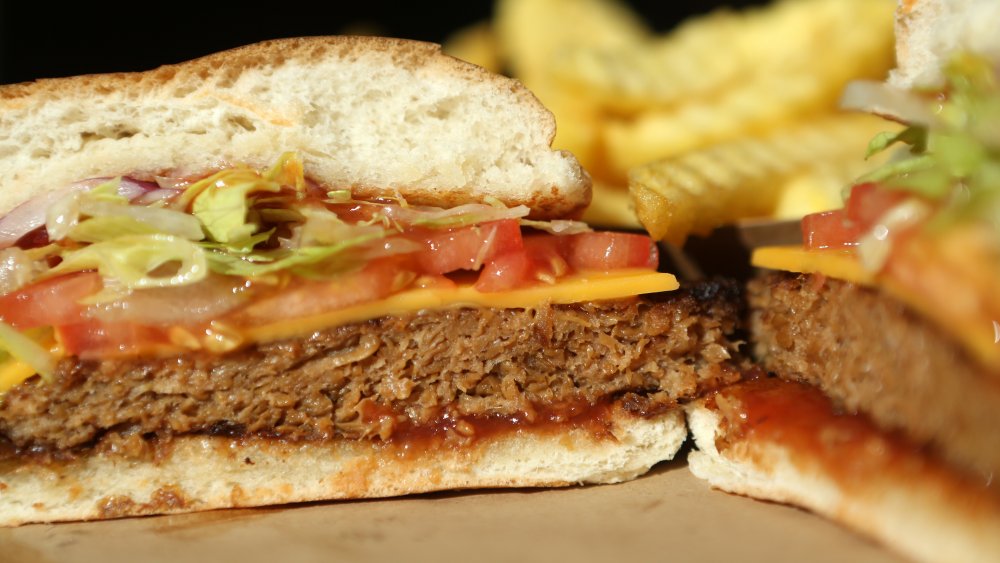
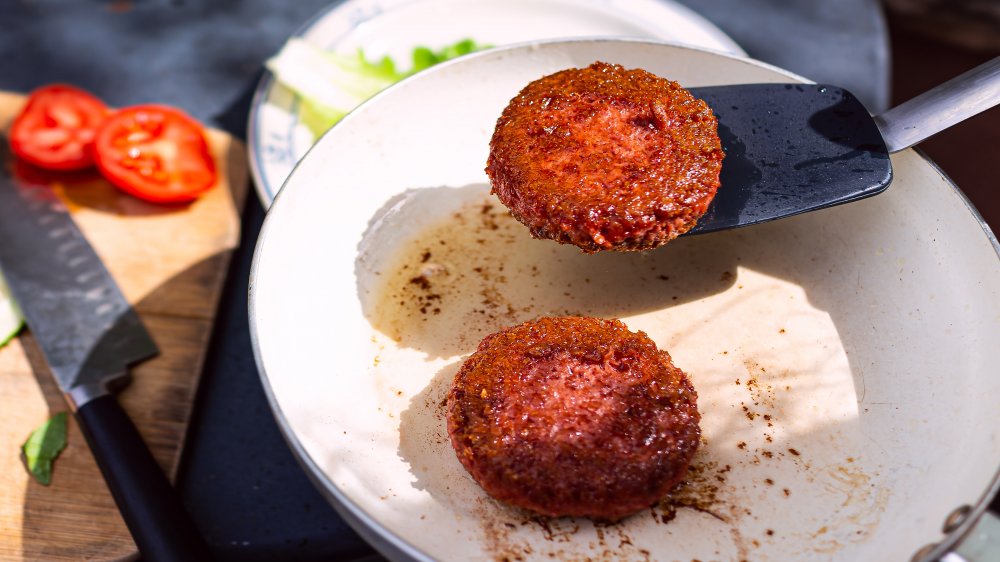
We eat with our eyes, and that's no exception for the Across Burger. Information technology's almost indistinguishable from footing beef in the grocery stores, and in fact, is usually sold with the footing meats instead of with the other vegan meat-substitutes. Simply there's one trouble: a raw burger patty and a cooked burger patty look cipher alike. While one is a soft, pinkish mush, the other is a brown, caramelized disc that tin hold its shape. How tin can a product that is not meat replicate the style meat looks both before and after the grill?
The undercover is apples. If you've ever sliced apples, y'all've seen how quickly they turn brown when exposed to air. Past adding apple excerpt to its recipe, Beyond Burger was able to make its proteins brown in the pan just like ground beef. This not only makes the finished product look more like beef, it also makes the cooking process experience a lot more similar cooking with beef.
However, the Across Burger's success in replicating meat is also somewhat of a double edged sword. Many vegetarians and vegans take opined that the Beyond Burger is as well similar to meat in its taste, texture, and appearance. But this simply makes it more pop with meat eaters.
Pomegranate and beets give Beyond Burger a lovely blush
Shutterstock
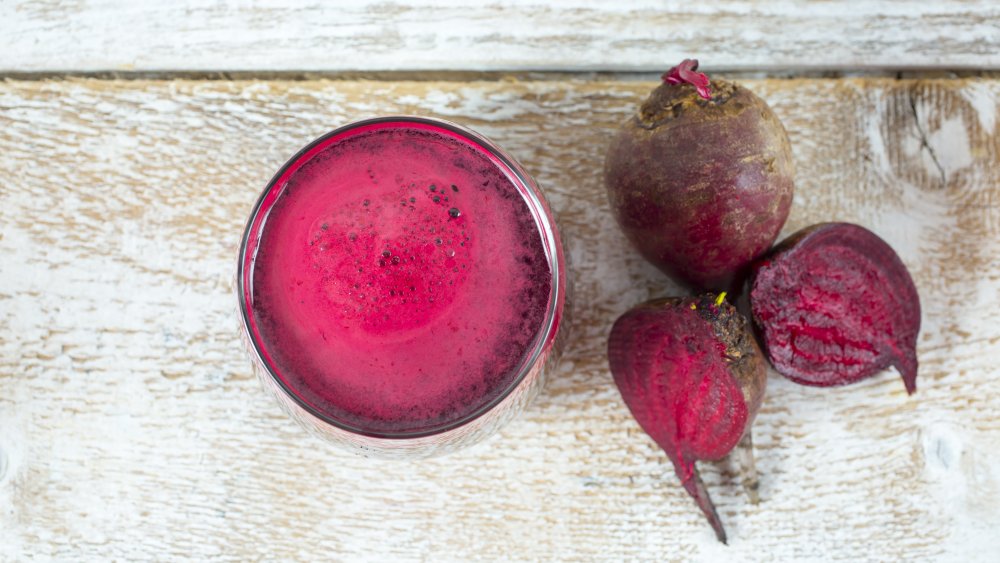
Perchance she'due south built-in with it. Maybe it'due south beet juice and pomegranate extract. While Beyond's biggest competitor, the Impossible Burger, uses a patented product chosen leghemoglobin to give its burgers a meaty taste and bright pink colour, the Beyond Burger looks to other corrective solutions.
By extracting the color from beets and pomegranate, Beyond is able to create a dye to turn dull, grey-ish brown plant proteins into a more flavory meat-similar pink (via Nutrient Navigator). Across also uses other colors, including green and brownish, for a more natural-looking pink.
This type of nutrient makeup might make some uneasy, merely the reality is a lot of foods on the market place have been spruced upwardly for the grocery store limelight, including farm-raised salmon and red meat. The reality is, humans are visual creatures, which makes us easy to manipulate when it comes to food purchasing and consumption.
But are these colour additives harmful? NYU Food Studies professor Marion Nestle writes nearly the upshot of artificial coloring in constitute-based meats on her blog, Food Politics. She admits that while the uncolored, grayness burgers would be a hard sell, she's all the same not a fan of the fake colors — no matter how "natural" they are.
"One of my personal food rules is never to eat anything artificial," she says. "These products are off my dietary radar."
Beyond Burgers include a nod to Captain Planet
Shutterstock
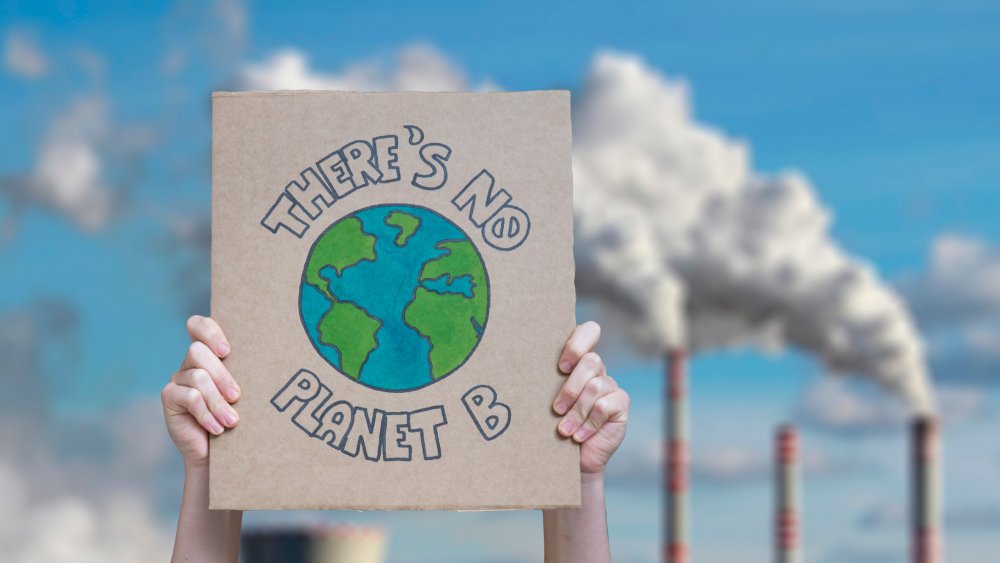
Eating meat is not keen for the planet. A report by the Environmental Working Group (via Scientific American), said red meat products are responsible for upwards to forty times more greenhouse gases than virtually vegetable and grain products. This means cutting back on meat products is one fashion to give our planet a helping hand.
That's where alternative meats like the Beyond Burger come up in. According to Across Burger, making their production creates ninety percentage less greenhouse gases and uses 46 percent less energy than a beef burger. Information technology as well uses less 99 percent less h2o and 93 percent less state.
Beyond argues that their production is created with optimal health in heed, withal some health critics observe the production as well processed, with too much salt, coloring, and bogus ingredients. However, compared to meat, The New York Times says the Beyond Burger is undoubtedly healthier for the planet (though whether or not it's enough to brand a large bear upon is even so up in the air). And those added colors, flavors, and technological processes make it pretty tasty, too.
Source: https://www.mashed.com/192631/what-youre-really-eating-when-you-eat-a-beyond-burger/
0 Response to "What Is in Beyond Beef Burgers"
Post a Comment